


How EDUFORGE Helped Teachers and Educators Reimagine Education in Coimbatore
For generations, the fundamental blueprint of a classroom remained almost untouched. A teacher stood at the front of the room, delivered a standardized lecture, and expected students to absorb and repeat the material. Today, that traditional model is colliding with a massive technological shift. Students now carry instant information engines in their pockets, while artificial intelligence can draft essays and solve equations in seconds.
For many teachers, this rapid evolution feels overwhelming rather than empowering. Instead of asking how to integrate new tools, institutions often default to banning them or clinging to outdated lecture formats.
To break this cycle, DJ Academy of Design (DJAD) in Coimbatore hosted EDUFORGE 2026 – Educators’ Innovation and Leadership Summit. Bringing together 40 academicians and educational leaders for a full-day immersive experience, the summit had a clear mission: help teachers step out of their daily routines, rethink their role in the classroom, and actively reimagine what education looks like for the next generation.
Shifting the Mindset: From Lecturer to Learning Designer
The core philosophy behind EDUFORGE 2026 was simple yet transformative. Technology should never replace the teacher; rather, it should free the teacher to do what humans do best—mentor, inspire, and guide critical inquiry.
Throughout the day, participating educators were invited to view themselves not merely as syllabus deliverers, but as learning designers. By combining design thinking with emerging digital tools, faculty members discovered how to turn passive lecture halls into collaborative, studio-style environments where curiosity drives the curriculum.
Reimagining Lesson Planning with Practical AI Workflows
One of the biggest hurdles teachers face today is administrative burnout. Hours spent drafting lesson plans, formatting slides, and organizing reading materials leave very little bandwidth for one-on-one student mentorship.
During Session 1: AI-Powered Teaching — From Lesson Planning to Learning Innovation, EDUFORGE directly addressed this friction. Rather than treating AI as an abstract threat, educators explored hands-on workflows—mirroring several of the essential AI tools curated on Taalk.com—to turn static syllabi into dynamic, multi-sensory learning experiences:
- Turning Dense Texts into Interactive Audio & Study Guides: Using Google Gemini Notebook (NotebookLM), teachers saw how they can upload thick textbooks, research papers, and curriculum PDFs to instantly generate cited study guides, mind maps, and conversational two-host audio overviews that students can listen to and question directly.
- Visualizing Complex Concepts in Seconds: With tools like Gamma and Napkin AI, faculty learned how to transform plain lecture notes into clean, interactive slide decks and editable visual flowcharts—replacing text-heavy slides with clear visual storytelling.
- Accelerating Academic Research: Platforms like Stanford STORM and OpenAlex demonstrated how educators can synthesize multi-perspective literature reviews and pull verified scholarly citations without spending days manually digging through databases.
- Breaking Language Barriers in the Classroom: By exploring sovereign Indic AI platforms like Sarvam AI—which supports speech recognition and natural voice synthesis across 22 Indian languages—educators saw how technical subjects can be made immediately accessible to students in their native language.
By automating repetitive preparation and visual formatting, teachers walked away with a clear realization: AI can handle the heavy lifting of structuring content, giving educators their time back to focus on human connection.
Stepping Beyond Textbooks Through VR, AR, and Immersive Tech
Reimagining education also means rethinking where and how students experience a subject. In Session 2: Beyond the Classroom — Exploring Learning Through VR, AR and Immersive Technologies, the summit moved from two-dimensional screens into spatial learning.
In an industrial and design-driven hub like Coimbatore, grasping spatial mechanics, product ergonomics, and architectural scale is vital. Educators explored how Virtual Reality (VR) and Augmented Reality (AR) allow students to step inside complex models, simulate real-world environments, and test prototypes safely before touching physical materials. Instead of memorizing diagrams from a textbook, learners experience concepts firsthand—dramatically improving retention and engagement.
The Art of the Engaging Classroom: Active Pedagogy
Even the most advanced AI or VR headset cannot rescue a passive curriculum. Following a thought-provoking afternoon screening titled Reimagining the Future of Learning, Session 3: The Art of Engaging Classrooms — Active Learning and Future-Ready Pedagogy brought the focus squarely back to human interaction.
Here, educators unpacked how to replace rote memorization with active, participatory learning. Drawing from design school studio culture, the session emphasized peer critique, real-world problem-solving, and iterative thinking. Teachers explored practical classroom frameworks that encourage students to ask better questions, collaborate across disciplines, and take ownership of their learning outcomes.
Experiencing Design-Led Education in Action
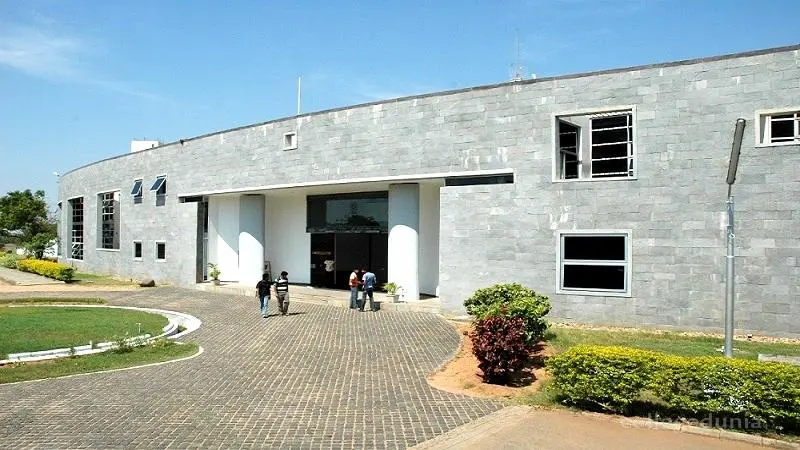
To ensure these ideas did not remain purely theoretical, Session 4: DJAD Campus Tour and Showcase immersed visiting faculty inside DJ Academy of Design’s live studio ecosystem. Walking through specialized prototyping labs and collaborative workspaces, educators witnessed how physical environments and studio pedagogy work together to spark student creativity.
The summit concluded with a valedictory session and certificate distribution, sending 40 energized educators back to their respective institutions equipped with a fresh toolkit and a renewed sense of purpose.
The Ripple Effect Across Kovai’s Classrooms
When you help one teacher reimagine how they teach, you impact hundreds of students every single year. By hosting EDUFORGE 2026, DJ Academy of Design sparked a vital multiplier effect across Coimbatore’s academic community—proving that when educators are given the right tools, space, and inspiration, they don’t just adapt to the future of education; they actively build it.
Are you an educator, academic leader, or institution in Coimbatore pioneering new ways of teaching and innovation? Share your campus initiatives and connect with Kovai’s growing ecosystem of changemakers on SmartKovai.com.

 empowered Coimbatore teachers and educators to reimagine learning with AI, VR/AR, and active pedagogy.)