


Tracking Coimbatore’s Progress through the Years
Over the last few years, Coimbatore has been expanding beyond its industrial roots. It is no longer simply the Manchester of the south but is a city that has gone beyond that title to transform itself into a sprawling multi-sector urban hub. The city can no longer be defined by a single industry.
In Coimbatore, education, manufacturing, and technology intersect to create wealth. This growth, however, comes with friction, revealing a city in transition, as opposed to one that has fully arrived. This shift is reflected in the city’s economic indicators.
The city’s foundation and expansion
At the macro level, Coimbatore’s upward trajectory reflects the broader rise of tier-2 cities throughout India. According to the Economic Survey of Tamil Nadu 2025–26, Coimbatore recorded one of the highest district-wise Per Capita Net Domestic Product (PNDP) income numbers- ₹4.08 lakh. Coimbatore’s metrics significantly outperform the state average of ₹3.62 lakh and the national average of around ₹1.8 lakh. Coimbatore’s success in numbers can directly be tied to its highly industrialized ecosystem, growth in the export sector, and its dense MSME network.
Its economic core remains robust, anchored in textiles, motor/pump manufacturing, automotive components, and a strong foundry network. Coimbatore is one of India’s key textile hubs with about 3,000 textile enterprises, as well as an integrated supply chain for spinning, weaving, and machinery production. The industry functions as a self-sustaining manufacturing cluster due to its ability to manufacture advanced machines and export yarns, garments, and home textile products.
Motor and pump industries, a cornerstone of Coimbatore’s local economy, are estimated to produce over 40% of India’s water pump motors, cementing its status as India’s pump city. Although COVID-19 led to fluctuations in this segment, it remains a key component of the city’s economy.
In Tamil Nadu, Coimbatore, along with Chennai, contributes to about 35% of the nation’s auto component production. This industry is growing rapidly due to rising EV production demands. Tamil Nadu secured US$ 2.209 billion in investment proposals in 2022-23, further solidifying growth in this sector.
As the foundation of the city remains steadfast, what has changed is the layering of new sectors over the existing industries in Coimbatore. As part of the city’s push into higher-value manufacturing, the Tamil Nadu Defence Industrial Corridor, Coimbatore, now comprises over 120 aerospace and defence firms. These firms are involved in precision manufacturing, including components for unmanned aerial vehicles and missile systems.
At the same time, traditional manufacturers are also expanding and exploring new arenas such as Food Processing and Automation, Med-Tech, Precision Engineering and Smart Manufacturing, Electrical vehicle components, and so on. Alongside this evolution and expansion of manufacturing industries, a more visible transformation has been underway in the city’s technological corridors.
IT Expansion and the booming start-up grid
Coimbatore is steadily rising as a vital tier-2 technology hub in India, with exports exceeding ₹15,000 crore in FY 2024–25, making it the second largest software exporter in Tamil Nadu.
Coimbatore’s IT industry has expanded by over 265% since 2019, significantly outpacing national sector growth of around 12.5%. The surge is mirrored in ecosystem expansion, with start-up numbers rising fivefold since 2020.
According to a 2023 report by the National Association of Software and Service Companies (NASSCOM), Coimbatore ranks 13th in the list of the best start-up destinations in the country.
This surge is underpinned by low operating costs, readily available skilled human resources, and increasing investment from major IT companies.
Coimbatore’s IT boom is closely tied to its expanding education ecosystem, which produces a steady pipeline of skilled workers. It hosts several of the nation’s major institutions for higher education, with over 100 arts and science colleges, indicating sustained growth in the education sector.
In recent years, this expansion has also been strengthened through improved academic rankings, with several colleges within the area ranking among the best hundred colleges of India as per the NIRF list.
Infrastructural changes
While the city has witnessed significant infrastructural development over the past few years, infrastructural development remains uneven.
The recent plan to expand the Coimbatore International Airport, estimated at over ₹2,000 crore, aims to scale up the terminal capacity from 18000 square meters to 75000 square meters, and extend the runway. Officials have reported that this is aimed at facilitating international connectivity, diversifying it to reduce reliance on Chennai.
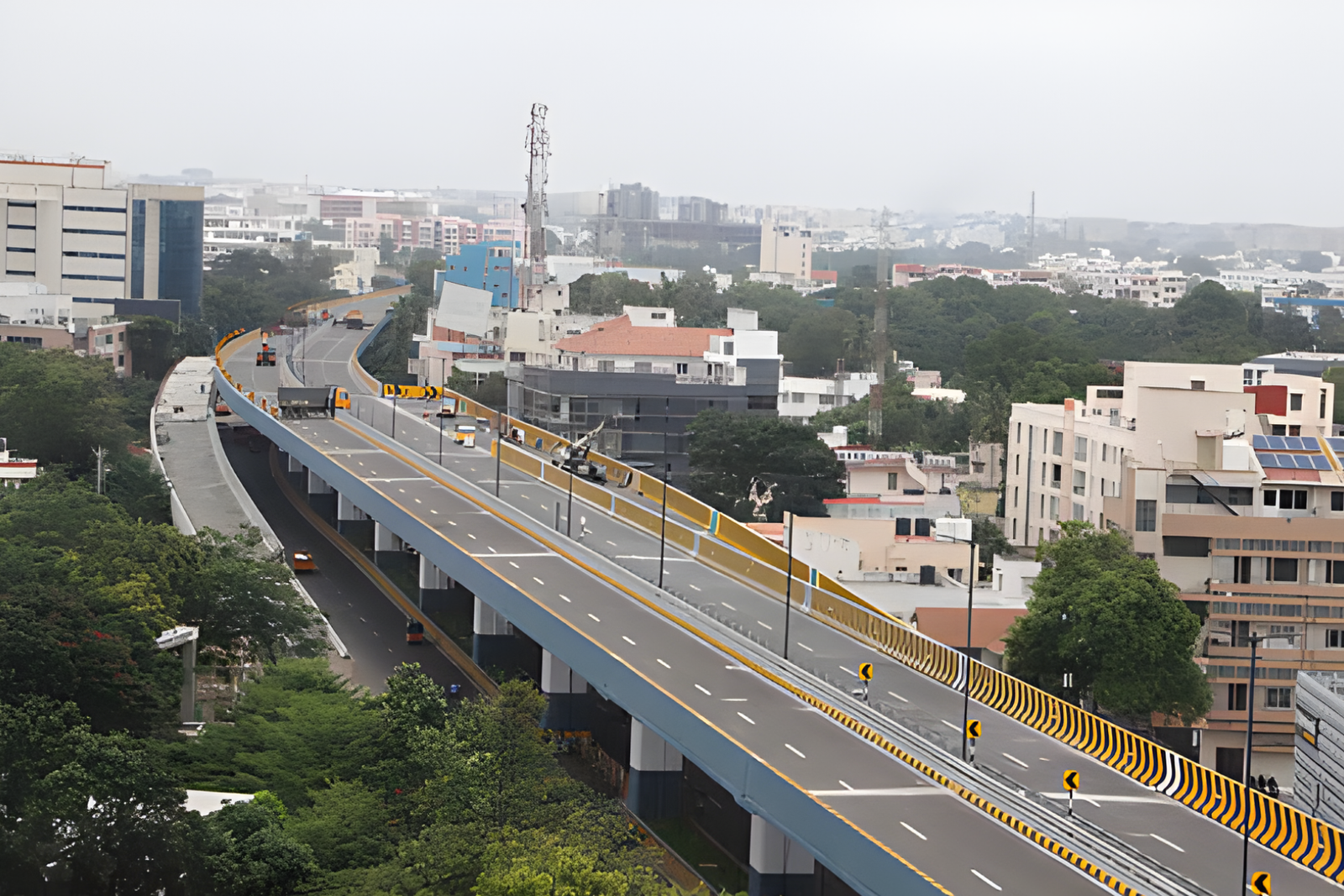
The road infrastructure is also undergoing considerable changes in Coimbatore, with the recent opening of the Avinashi Road Elevated Expressway- one of the longest flyovers in the state. And the completion of projects such as the Ukaddam-Aathupalam flyover, to ease the flow of traffic along key corridors in the city.
Alongside that, the metro rail project, estimated at ₹9000 crore, has moved from the concept to the approval stage, indicating a significant step in developing the local public transportation infrastructure.
An array of urban upgradation projects under the smart city initiative were carried out throughout the city. Lake restoration projects like Periyakulam and Velankulam have resulted in the development of non-motorized transport corridors spanning over 30 kilometers. This has also contributed to improving flood management and groundwater replenishment.
Solar power generating infrastructure projects in Ukkadam are aimed at improving energy efficiency and reducing municipal electricity costs.
Yet, progress on the ground remains uneven. Despite these developments, Coimbatore still struggles with delays and inefficient implementation. Imbalanced implementation often results in unequal access. Traffic congestion still continues to be a problem in several parts of the city despite the costly transportation and traffic facilitation initiatives.
Conclusion
While the city is yet to see metro-scale influxes of people, Coimbatore continues to attract students and young professionals throughout the south. And this migration reflects a broader shift in how the young Indian workforce chooses to live and work. Lower living costs, reduced congestion, and proximity to rising job clusters have positioned Coimbatore as a viable alternative to larger metro-cities.
The gradual inflow has reshaped the city’s existing socio-economic landscape, driving up the demand for housing, services, and lifestyle infrastructure. It has also reinforced Coimbatore as a hub that not only attracts talent but also retains it. However, this advantage remains conditional- as more people choose to live in the city, the more the strain on infrastructure, mobility, and resources becomes visible.
The next stage in Coimbatore’s evolution would directly be dependent on how well it handles this transition.

