


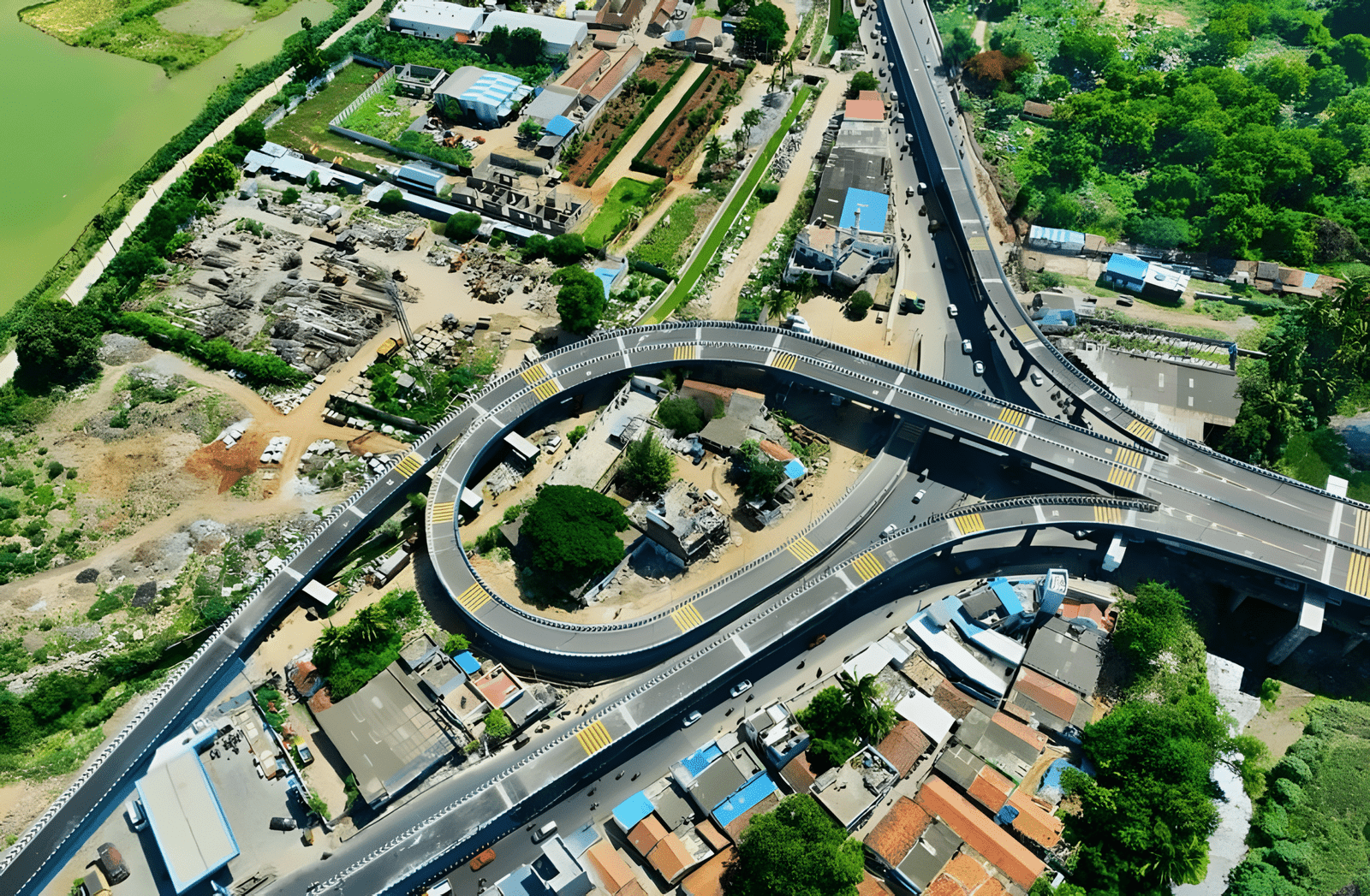
Flyovers have long been seen as the ultimate solution to urban traffic congestion. In Coimbatore, new elevated corridors are steadily reshaping the city’s road network, promising faster travel and reduced bottlenecks. However, as traffic volumes continue to grow, concrete alone may not be enough.
To remain efficient in the long run, Coimbatore’s flyovers must evolve into cognitive flyovers—infrastructure that thinks, adapts, and responds intelligently to real-world conditions.
The Limits of Traditional Flyovers
Traditional flyovers are designed based on projected traffic volumes at the time of construction. While they initially ease congestion, many eventually become choke points due to:
- Rapid urban expansion
- Increase in private vehicle ownership
- Unpredictable traffic patterns
- Lack of real-time monitoring
Without adaptability, even the most well-designed elevated corridors risk becoming outdated within a decade.
What Is a Cognitive Flyover?
A cognitive flyover in Coimbatore would combine physical infrastructure with digital intelligence. It uses real-time data, sensors, and AI-driven systems to continuously monitor and optimise traffic movement.
Instead of being passive structures, cognitive flyovers actively respond to:
- Traffic density and speed
- Accidents or stalled vehicles
- Weather conditions
- Peak and off-peak hour variations
This shift transforms flyovers from static assets into dynamic mobility systems.
Why Coimbatore Needs Cognitive Flyovers Now
Coimbatore’s growth corridors—especially around arterial roads, industrial zones, and upcoming metro alignments—are experiencing complex traffic patterns. Elevated corridors intersect with service roads, feeder routes, and pedestrian movement.
A cognitive approach allows authorities to:
- Manage congestion before it escalates
- Integrate flyovers with surface road traffic
- Improve safety and travel reliability
As infrastructure investments increase, intelligence becomes just as important as engineering.
Key Features of a Cognitive Flyover System
1. Real-Time Traffic Monitoring
Cameras and sensors installed on flyovers can track vehicle volume, speed, and lane usage. This data helps traffic management centres identify congestion points instantly.
2. Adaptive Traffic Signal Integration
Cognitive flyovers can coordinate with nearby junction signals, adjusting timings based on live traffic conditions rather than fixed schedules.
This improves overall corridor efficiency, not just movement on the flyover itself.
3. Incident Detection and Rapid Response
AI-powered systems can detect accidents, breakdowns, or sudden slowdowns. Early alerts allow authorities to clear disruptions quickly and redirect traffic where needed.
4. Predictive Maintenance
Sensors embedded in the structure can monitor vibrations, load stress, and wear. Predictive maintenance ensures safety while reducing long-term repair costs.
Benefits for Commuters and the City
For commuters
- Reduced travel time variability
- Improved road safety
- Better traffic information and alerts
For city planners
- Data-backed infrastructure decisions
- Optimised use of public investment
- Long-term scalability of flyover networks
A cognitive flyover in Coimbatore ensures that elevated corridors continue to deliver value well beyond their initial years.
Challenges to Implementation
Implementing cognitive systems requires:
- Investment in digital infrastructure
- Skilled traffic analytics teams
- Integration with existing city systems
- Inter-agency coordination
However, compared to the cost of building new flyovers, adding intelligence to existing structures is often more economical and impactful.
Rethinking Flyovers as Living Infrastructure
Flyovers should no longer be viewed as one-time construction projects. In a rapidly evolving city like Coimbatore, they must function as living infrastructure—learning from data and adapting continuously.
By embracing the concept of cognitive flyovers, Coimbatore can ensure that its elevated corridors remain efficient, safe, and future-ready.
Final Perspective
The future of urban mobility is not just about building more roads, but about making existing infrastructure smarter. For Coimbatore, cognitive flyovers could be the missing link between rapid growth and sustainable traffic management.

