


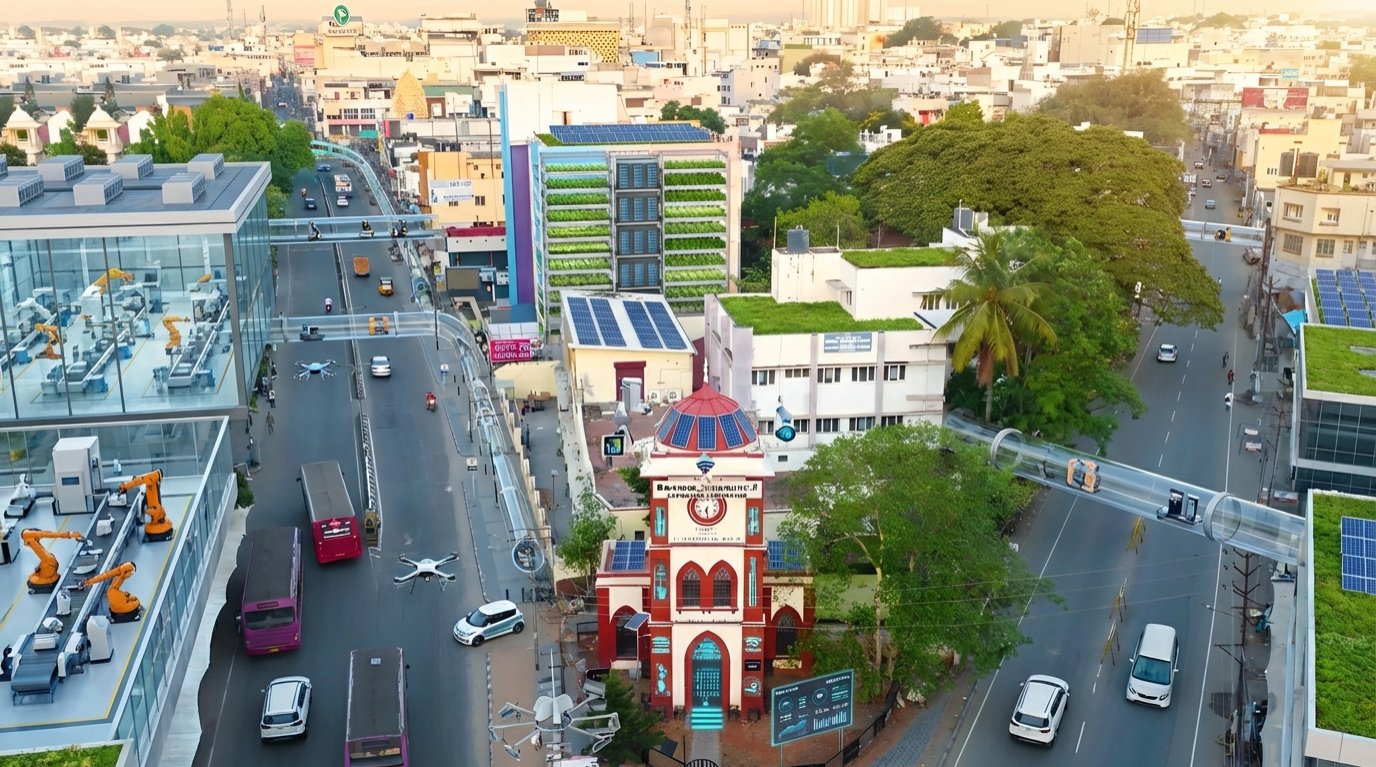
Coimbatore, fondly called the “Pump City of India” for its historic dominance in pump manufacturing, is entering a new industrial era. With AI-driven manufacturing, the city’s factories, supply chains, and logistics networks are beginning to integrate seamlessly with urban infrastructure, creating a blueprint for a fully autonomous industrial ecosystem.
This convergence of smart manufacturing and city-wide intelligence is transforming Coimbatore from a traditional manufacturing hub into a cognitive industrial city.
Why Coimbatore Is Ready for AI-Driven Manufacturing
Coimbatore has long been known for:
- Precision engineering and pump manufacturing expertise
- A dense cluster of MSMEs and industrial parks
- Skilled workforce in mechanical and electrical engineering
- Growing IT and startup ecosystems
By adopting AI-powered production systems, Coimbatore’s factories can improve operational efficiency, reduce downtime, and integrate with urban services such as energy grids, transport, and logistics.
Key Components of AI Integration in Pump Manufacturing
1. Smart Factory Automation
AI-enabled machines can now monitor and adjust production parameters in real time. Benefits include:
- Reduced defects and waste
- Faster production cycles
- Predictive maintenance to minimize downtime
This helps Coimbatore’s pump industry stay competitive in the global market.
2. Autonomous Logistics & Supply Chains
Urban integration allows factories to communicate with city traffic management and logistics networks. AI systems can:
- Optimize delivery routes for raw materials and finished pumps
- Predict demand spikes
- Coordinate with warehousing and shipping services
Result: lower fuel consumption, faster deliveries, and reduced congestion.
3. Energy and Resource Optimization
By linking manufacturing units with smart city grids:
- Energy usage can be monitored in real-time
- Peak demand can be reduced with predictive scheduling
- Water and resource consumption are minimized
This is particularly relevant for pump manufacturing, which requires both electricity and water for testing and production.
4. Data-Driven Urban Integration
Factories generate vast amounts of operational data. Cognitive urban systems can leverage this data to:
- Reduce traffic congestion near industrial zones
- Predict maintenance needs for city utilities
- Improve emergency response planning for industrial districts
5. Workforce Augmentation
AI doesn’t replace human expertise; it enhances it. Employees in Coimbatore’s pump factories can:
- Focus on complex decision-making tasks
- Use predictive insights to improve productivity
- Engage in upskilling programs tied to AI systems
The result is a more skilled, agile workforce ready for Industry 4.0 demands.
Benefits for Coimbatore
- Economic: Increased manufacturing efficiency, lower operational costs, and higher competitiveness
- Urban: Better traffic flow, smarter energy distribution, and improved industrial safety
- Environmental: Optimized resource consumption reduces energy and water footprints
- Social: Upskilled workforce and higher-value jobs
By integrating AI-driven manufacturing into the urban operating system, Coimbatore becomes a model for industrial and urban co-evolution.
Challenges and Implementation Considerations
- High initial investment in AI systems and sensors
- Training workforce for AI adoption
- Integration with legacy factories and infrastructure
- Coordination between industrial bodies and municipal authorities
Despite these challenges, early adopters in Coimbatore are seeing measurable gains in efficiency and sustainability.
Conclusion
The Pump City is no longer just a manufacturing hub; it is evolving into a cognitive industrial city. By combining AI-driven manufacturing with urban operating systems, Coimbatore demonstrates how traditional industries can embrace automation, sustainability, and efficiency simultaneously.
The result is a city where pumps are not just produced—they are part of an intelligent, responsive ecosystem that optimizes production, logistics, and urban operations in real time.

