


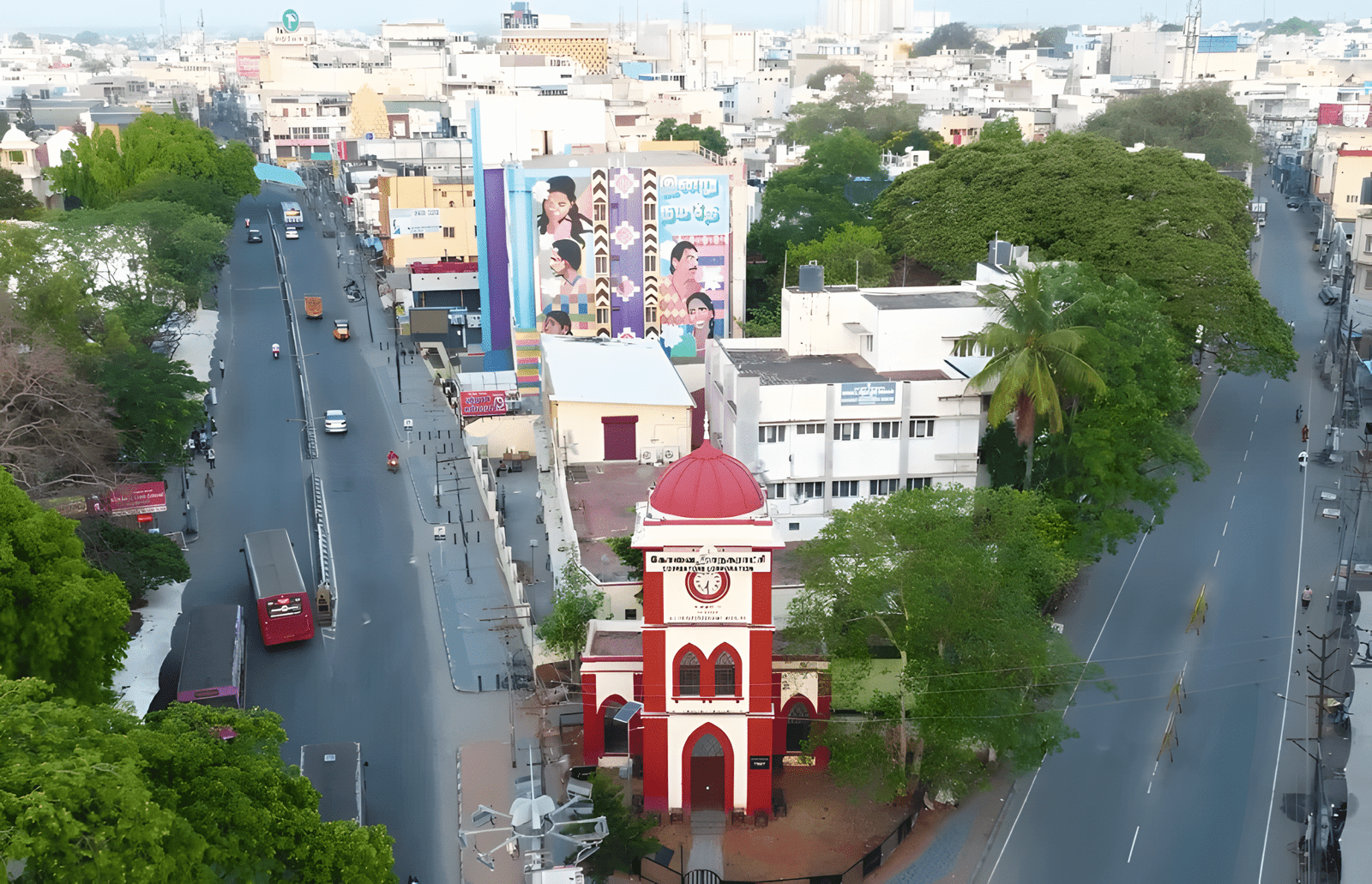
As Coimbatore expands outward with new roads, flyovers, and corridors, its historic core continues to carry the city’s cultural and economic memory. Areas like Town Hall, Ukkadam, and Oppanakara Street represent what urban planners call brownfield zones—densely built areas with ageing infrastructure and limited scope for traditional redevelopment.
Retrofitting these spaces is complex. Yet, with the right mix of technology, planning, and community engagement, retrofitting old Kovai can transform legacy neighbourhoods into sentient zones—urban areas that sense, respond, and adapt to real-time conditions.
What Are Brownfield Areas in Coimbatore?
Brownfield areas are not abandoned spaces. Instead, they are fully functional but infrastructure-stressed urban zones. In Coimbatore, Town Hall is a classic example.
These areas are characterised by:
- Narrow roads and high pedestrian density
- Ageing drainage, water, and power networks
- Informal commercial activity
- Heritage buildings and mixed land use
Demolition-led redevelopment is rarely viable here. Retrofitting becomes the only sustainable path forward.
Understanding the Idea of a Sentient Zone
A sentient zone uses technology to understand how people, vehicles, and utilities move through a space. It combines sensors, data platforms, and analytics to make infrastructure more responsive.
In practice, a sentient Town Hall could:
- Monitor pedestrian and vehicle flow
- Adapt traffic and parking management
- Detect flooding or utility failures early
- Improve safety through smart lighting and surveillance
The goal is not cosmetic “smart city” upgrades, but functional intelligence layered onto existing infrastructure.
The Challenges of Retrofitting Old Kovai
1. Physical Constraints
Town Hall’s dense built environment leaves little room for new ducts, cables, or widening roads. Retrofitting must work within existing footprints, often requiring creative, non-invasive solutions.
2. Legacy Utility Networks
Old water lines, drainage systems, and electrical networks are poorly mapped and difficult to integrate with modern digital systems. This makes data collection and system integration more complex.
3. Social and Commercial Sensitivity
Brownfield zones are economically active. Any disruption affects traders, residents, and daily wage workers. Retrofitting must be phased and minimally intrusive.
4. Governance and Coordination
Multiple agencies manage roads, water, power, and policing. Without coordination, even well-designed retrofitting projects risk fragmentation.
Where Retrofitting Shows Promise
Despite the challenges, retrofitting old Kovai also presents unique opportunities.
Smarter Mobility Management
By using cameras and sensors instead of road expansion, traffic flow around Town Hall can be managed dynamically, especially during peak market hours and festivals.
Flood and Drainage Intelligence
Smart sensors can monitor water levels in drains, providing early alerts during heavy rains and enabling quicker response to prevent flooding.
Public Safety and Walkability
Adaptive street lighting, crowd monitoring, and better signage can improve safety without altering the historic character of the area.
Why Brownfield Retrofitting Matters More Than Greenfield Development
New developments on the city’s outskirts are easier to plan. However, the heart of Coimbatore still beats in its older neighbourhoods.
Retrofitting:
- Preserves cultural and commercial heritage
- Improves liveability for thousands of daily users
- Delivers higher impact per rupee invested
- Avoids displacement and social disruption
For cities like Coimbatore, the future depends as much on upgrading the old as building the new.
Lessons for Coimbatore’s Urban Future
Turning Town Hall into a sentient zone is not about turning it into a tech showcase. It is about making the area safer, more efficient, and more humane.
Successful retrofitting requires:
- Incremental upgrades, not large-scale disruption
- Strong data governance and privacy safeguards
- Continuous engagement with local stakeholders
- Technology that serves people, not replaces them
Conclusion: Old Kovai, Smarter Kovai
Retrofitting old Kovai areas like Town Hall is one of Coimbatore’s toughest urban challenges—and one of its greatest opportunities. By carefully blending legacy infrastructure with modern intelligence, the city can create sentient zones that respect the past while preparing for the future.
The real triumph lies not in transforming how these places look, but in transforming how they function and respond to everyday urban life.

